
How Disability-Led Design is Changing India’s Arts and Cultural Places
and instititutions like the Museum of Art and Photography, Serendipity Arts Foundation, and National Museum are leading the way with intentional inclusion (avlbl with Indian Sign Language translation)

Dear Reframers,
This is Reframing Disability’s 70th edition, and I’m so proud of being able to bring you stories of inclusion every fortnight! Thanks for reading and engaging with this newsletter and embracing it with all its imperfections. I’m glad you’ve found community, resources and stories that resonate with you through these editions. What else have you found interesting? Press reply and let me know.
Today’s story will take you to Indian arts institutions and people who make them inclusive. It explores what inclusion in the arts looks like, and how institutions are creating space for self-expression, advocacy, and resistance to exclusion while building communities and reaching new audiences.
It’s a part of Reframing Disability’s collaborative content with the Global Disability News Network, reported by me and edited by Karina Sturm.
If you are an Indian Sign Language user, watch it in your native language first, by Deepak KC, a Deaf interpreter from Bengaluru.
ID: Deepak, an Indian man with black hair and a beard, is dressed in a black shirt signing the story.
“People are more likely to attend when they find the events relevant and someone from their own community is involved”
As a young boy on a school trip to a museum, Shailesh Kulal remembers feeling left out. “I could hear my classmates whisper, ‘wow, wow’ as we moved through the exhibits,” Kulal says. “But I could not understand what the excitement was about.”
Blind since birth, Kulal could not access what the exhibits were meant to convey, and the museum staff made no effort to help him engage with them. “That was my first and last visit to a museum as a child,” he says.
Kulal also tried learning Yakshagana, the traditional dance-drama of coastal Karnataka, in school. He struggled to follow the movements because the teaching was not adapted for him. “I was included in the performance, but I couldn’t dance properly,” he recalls. “The audience pitied me and said that my disability became a barrier to learning to dance.”
Kulal’s experience changed outside school when his mother enrolled him in Yakshagana classes taught by a supportive guru. Here, he was guided through rhythm by touch and allowed to feel the dancer’s movements, which enabled him to excel. Since then, he has performed Yakshagana on stage and learned other dance forms, which he now teaches to visually disabled participants.
Reflecting on these experiences of exclusion and empowerment, Kulal believes that access can be a game-changer. Motivated by his journey, he has dedicated himself to ensuring full participation for people with disabilities in cultural life.
For the past three years, since the Museum of Art & Photography’s (MAP) launch in Bengaluru, he has worked as an inclusion manager at this nonprofit institution. He is part of a full-time inclusion team.
Kulal’s experience is far from unique. Across India, arts and cultural spaces remain largely inaccessible for people with disabilities. While some museums and arts festivals have introduced accessibility initiatives such as tactile exhibits and audio guides, features like sign-language interpretation, inclusive programming, representation of disabled artists, and visitor design are limited.
In the past few years, a small number of arts and cultural spaces have begun treating accessibility as core to their design and programming. They build community and become hubs for inclusive experiences.
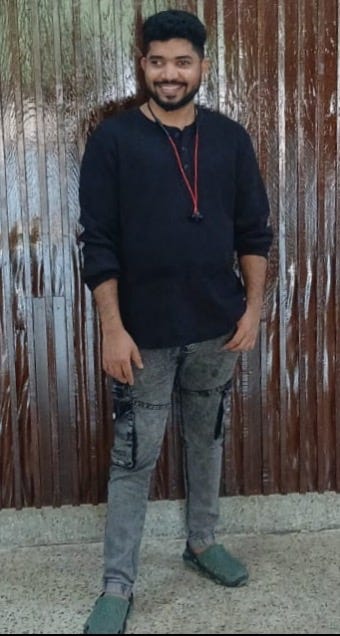
Shailesh Kulal is part of MAP’s full time inclusion team. Courtesy: Shailesh Kulal
Building accessibility from the beginning
One of those institutions is MAP, where accessibility was considered during the conceptualization stage itself. Founder Abhishek Poddar envisioned MAP as a space that welcomes audiences often excluded from traditional art institutions.
The building includes ramps, extra-large elevators for wheelchair users, double-rail staircases, tactile and anti-slip tiles, and accessible washrooms.
“The inclusion team was recruited from the beginning. However, accessibility remains every department’s responsibility,” says Meghana Rao, MAP’s head of inclusion. People with disabilities work across departments within the museum. Some directly contribute to accessible exhibition design and programming. MAP also consults accessibility experts and conducts focus group discussions with the disability community to gather feedback and improve.
Inclusivity is embedded in the institution’s daily operations as much as in its public-facing programs. “All of us have some proficiency in Indian Sign Language. We have weekly ISL classes for staff,” Rao says. Team meetings routinely include sign-language interpreters, so Deaf employees can participate fully.
Recruitment at MAP has been intentional. Job calls explicitly encourage persons with disabilities to apply. “Colleagues like Shailesh have networks that help us connect with and recruit people with disabilities,” Rao says.
Additionally, MAP’s six-month internship program specifically for persons with disabilities has helped identify candidates who later transitioned into permanent roles.
All of this works because “the museum’s leadership has remained clear in its commitment to creating opportunities for disabled professionals across departments,” Rao says.
Strategies that drive inclusion
One strategy that has helped MAP is year-round disability-focused programming. There are also events celebrating occasions such as the International Week for Deaf People and the International Day of Persons with Disabilities. Such events have helped disabled visitors see the museum not as intimidating, but as a place they can return to.
Events regularly involve disabled artists, facilitators, and speakers in the programming. Some recent events include a panel on Deaf theatre in a hearing world, human libraries featuring disabled artists, Deaf book clubs, Indian Sign Language Jams, and Visual Vernacular shows. “People are more likely to attend when they find the events relevant and someone from their own community is involved,” Kulal says.
Workshops and walkthroughs are adapted for different audiences. Facilitators use more open-ended, interactive approaches with neurodivergent visitors rather than rigid narratives. For visually impaired visitors, the focus is on touch and texture, and explaining why certain objects were selected as tactile experiences.
Text labels include braille and large print. A screenreader-friendly Bloomberg Connects app is available for image descriptions and exhibit information. MAP also offers a quiet room and an accessibility email for visitors needing extra support.
For many disabled visitors, this consistently available support is what makes MAP feel accessible and safe.
Of course, things are not perfect. Some initiatives are still evolving. The museum is developing tactile navigation systems. These will include tactile pathways and braille-supported maps to help blind and low-vision visitors move independently.
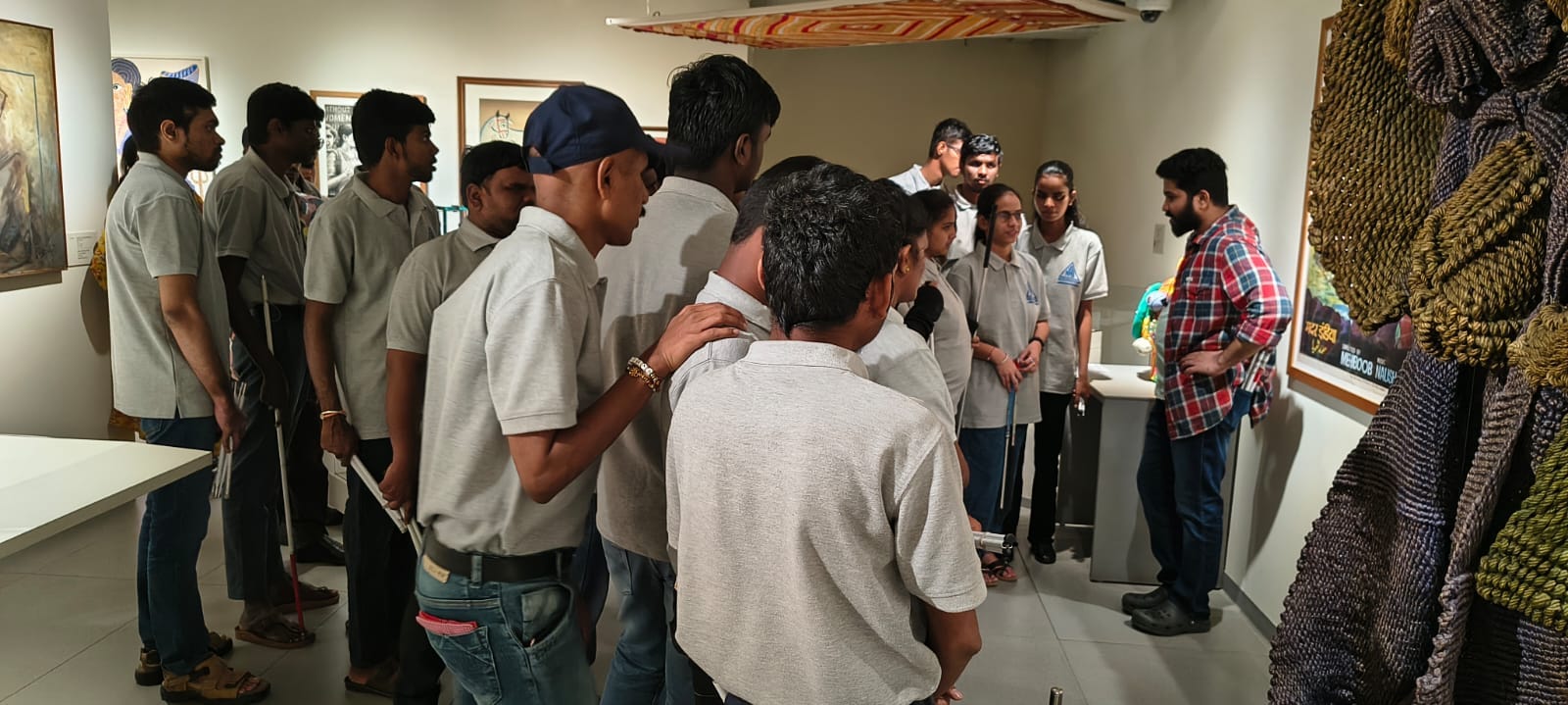
Shailesh conducting an exhibition walkthrough for blind students at MAP. Courtesy: Shailesh Kulal
This focus on accessible spaces raises a deeper question: who gets to create and shape the art within these institutions?
Besides MAP, arts festivals such as the Serendipity Arts Festival (SAF) in Goa, the Kochi-Muziris Biennale in Kerala, and the India Art Fair in Delhi have begun including disabled artists in their mainstream programming. They no longer treat disability as a separate category. But this is still rare.
Artist and wheelchair user Salil Chaturvedi says disabled artists in India are still seen through a charity or inspirational lens. They are not recognized as artists with their own political, creative, and aesthetic concerns.
“The dominant narrative is that the art is valuable because the artist is disabled,” Chaturvedi says. When someone creates artwork “despite their disability,” its value rises.
“But disabled artists need the space to express themselves on their own terms, even if the work is dark, angry, or uncomfortable. That is what art is meant to do.”
Last December, for the second consecutive year, at the annual Serendipity Arts Festival in Goa, Chaturvedi curated an accessibility program featuring disabled artists. One exhibition, ‘Therefore I Am’, featured seven disabled artists whose work engaged disability as a political and artistic experience.
There was an uptick in audience turnout since the programming catered to diverse people, says Chaturvedi.
But finding artists took time because “disabled artists often lack access to arts education, residencies, mentorship, networks, and opportunities. These are what sustain professional art careers,” Chaturvedi says.
As a result, museums and galleries often claim there are “not enough” disabled artists to exhibit. They overlook the barriers that keep many artists out of the ecosystem in the first place.
Chaturvedi’s work as a curator has involved educating design universities about accessibility. He connects them with schools for kids with disabilities to help them understand students’ needs. One design professor at the University of Design, Innovation and Technology, who has taught for 30 years, told him, “I have never done any designing for an audience like this. You gave me something new.”
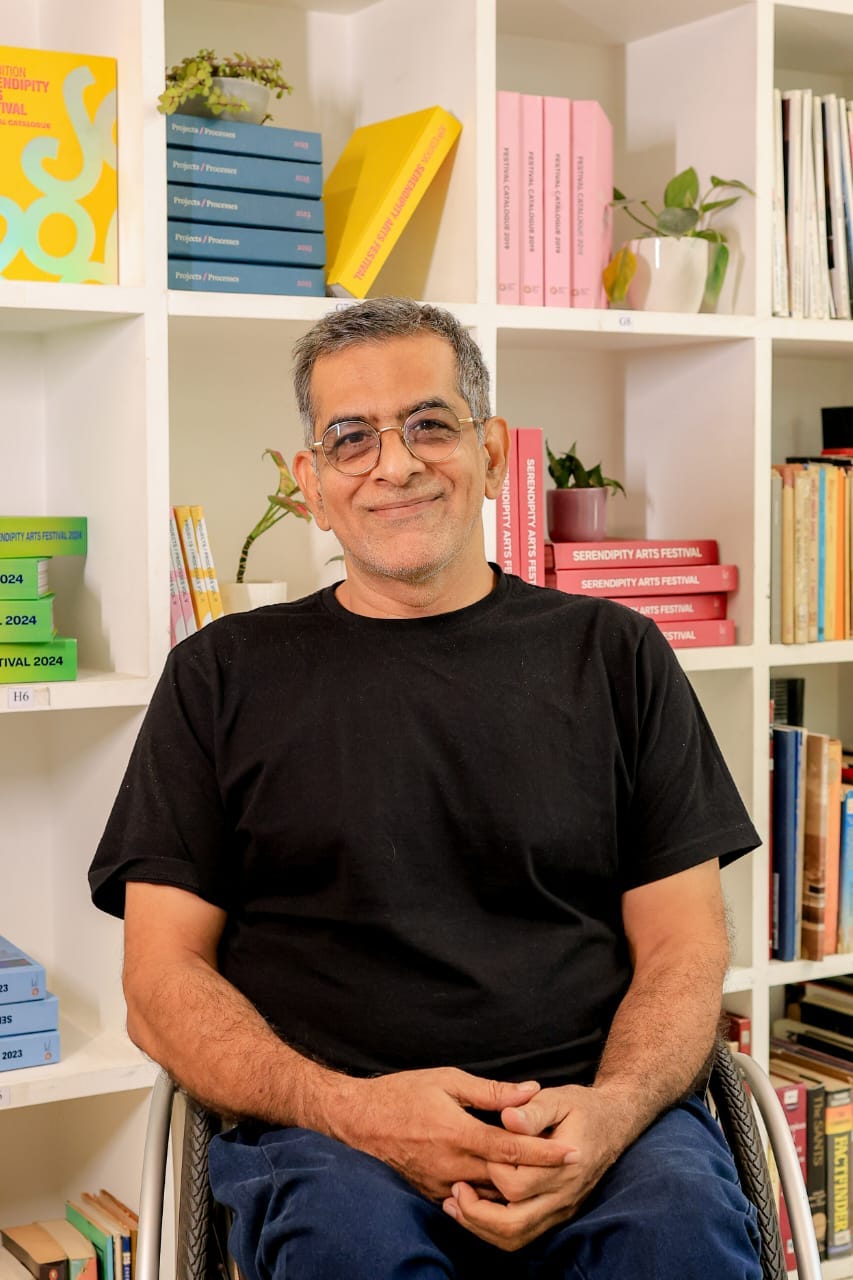
“The dominant narrative is that the art is valuable because the artist is disabled,” Chaturvedi says. Courtesy: Salil Chaturvedi
The impact of inclusion
During their most recent annual survey, 80% of visitors said they visit MAP because it is welcoming and accessible to all.
“Disabled visitors have often told me it was difficult for them to find accessible spaces to enjoy and hang out with friends in Bengaluru before MAP,” Kulal says.
A mother in Goa calls SAF her son’s annual pilgrimage. She makes it a point to take her neurodivergent son to SAF every year since he finds the Festival a space of stimulation, joy, and belonging.
Tactile exhibitions and multisensory engagement have also attracted sighted visitors seeking to experience art differently.
At the National Museum in New Delhi, the gallery “Heritage at My Fingertips,” created by the NGO Saksham Trust, features tactile 3D and 2D replicas of Indian monuments designed for visually impaired visitors. Each model includes audio descriptions accessible through QR codes.
Rummi Seth, co-founder of Saksham Trust, says the gallery attracts blind and low vision visitors, as well as sighted tourists and students. “People tell us they have visited monuments like Qutb Minar many times,” she says. “But only after touching the models do they feel they have really understood the structure.”
Interestingly, Indian universities are beginning to explore inclusive arts spaces too. Saksham is developing tactile replicas of heritage monuments for Dr. Shakuntala Mishra National Rehabilitation University, which has many visually disabled students.
Since many people in smaller towns and rural areas may never visit museums, Seth wants to someday start a “museum on wheels” carrying tactile replicas of monuments to schools and community organizations in remote regions.
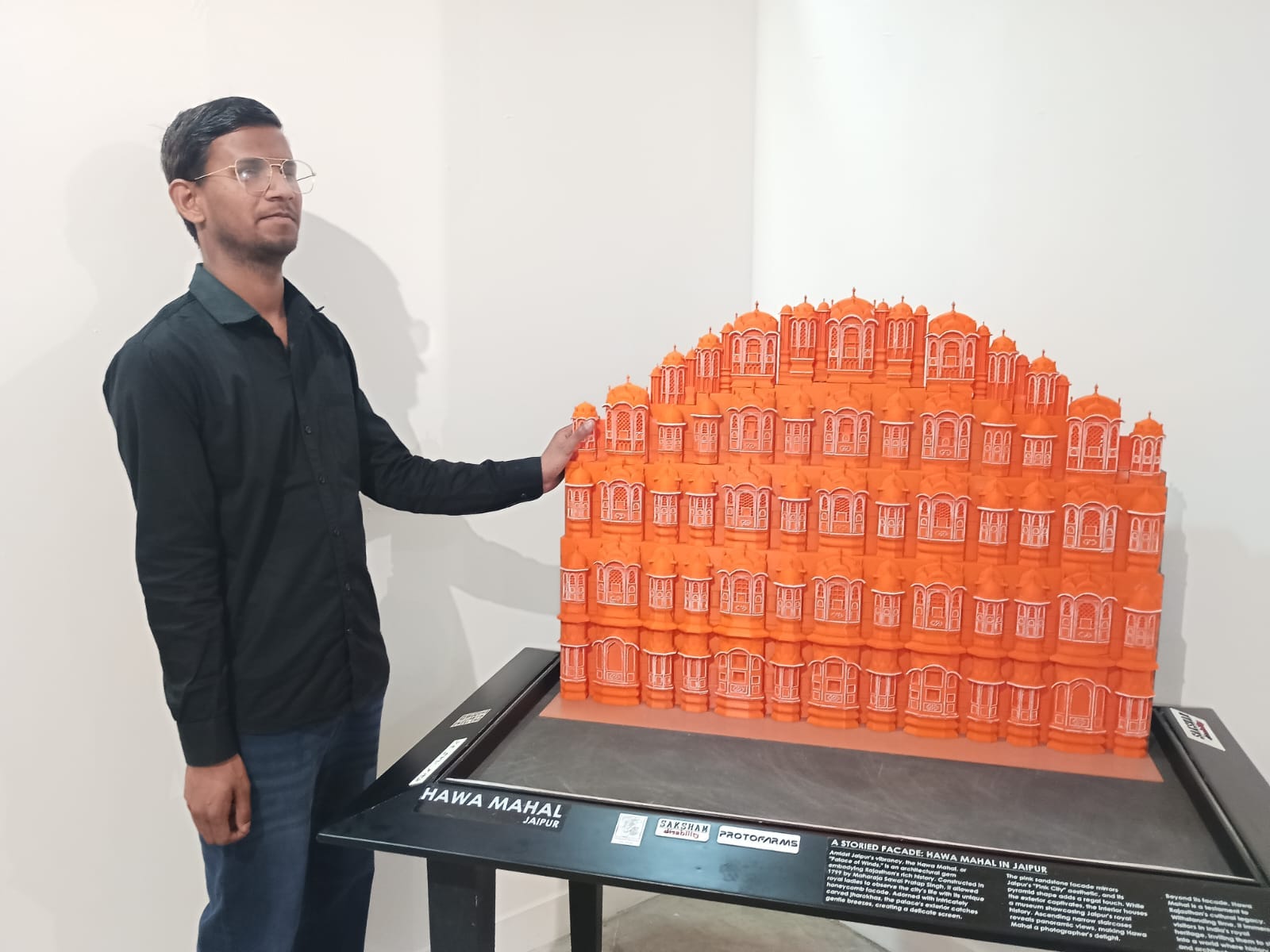
A visually disabled man experiences Jaipur’s Hawa Mahal’s miniature model at the National Museum in Delhi. Courtesy: Rummi Seth
Why accessibility remains rare
Despite these efforts, accessibility remains limited across India’s cultural sector, one reason being the “charity mindset”.
Accessibility consultant Siddhant Shah, founder of Access For ALL, works with cultural institutions to improve inclusive design practices. According to Shah, one of the biggest barriers institutions cite is cost.
“There’s an expectation that disability inclusion should be free,” Shah says. “People often ask why they should pay for accessibility, rather than understanding it as a right.”
“When they do consider accessibility, arts spaces often focus solely on making their space physically accessible, overlooking the need for intellectual and social access,” he says. Infrastructure accessibility can be challenging, especially in older heritage buildings that need retrofitting.
For Kulal, these barriers are exactly why accessibility must be treated as an ongoing institutional commitment.
He recently received the Accessibility Award from the National Federation of the Blind for advancing inclusion in arts spaces. “But my biggest reward is when people with disabilities visit MAP and go back happy,” he says.
Share the Global Directory of News Media Professionals
Reframing Disability’s Global Directory of Disabled News Media Professionals currently includes nearly 70 professionals from 17 countries and is steadily growing.
The Directory aims to give visibility to disabled media professionals by creating a database for those looking to commission paid work from them. It will help reduce some of the structural barriers they face, while making it easier for media to commission more diverse, inclusive storytelling and journalism.
Read more about its purpose and use. If you want your name to be added to the directory, please submit your details using this form.
Please share it widely to make it a success!
Image Description of Reframing Disability’s Logo
On a bright purple background, two white hand illustrations form an open rectangular frame. Inside the frame, the words ‘Reframing Disability’ are written in white text, symbolising a fresh perspective on disability.
ICYMI (In Case You Missed It)
Reframing Disability’s recent issues featured the “magical cure” trope films use for happy endings and an interview with a journalist with a psychosocial disability. Read or listen if you haven’t already!
What do you think of this edition? Press reply and let me know of any other arts institutions you find inclusive. I’m available on LinkedIn and Instagram as well, and Reframing Disability has an Instagram account too. Engage wherever you are active!
Warmly,
Priti