
When Disability Is"Magically Cured" For A Happy Ending
unpacking one of cinema's favourite plot twists

Dear Reframers,
When I first watched the Bollywood blockbuster Koi... Mil Gaya in 2003, I was struck by actor Hrithik Roshan’s brilliant portrayal of an adult with the mental age of a 11 to 12-year-old boy.
His character Rohit’s sense of wonder at small things, uninhibited laughter, open sulking; even the restless hands and uneven gait captured the demeanour of a pre-teen with striking authenticity.
For the film’s happy ending, however, the alien Jaadoo’s powers “fix” Rohit, erasing his disability and transforming him into a more intelligent, confident, and physically capable version of himself. One that’s more fitting for a conventional Bollywood hero.
Such a trope is often used in cinema and called the “cure narrative” or “magical cure” trope in disability representation, where disability is framed as a “tragedy to be overcome”, and the “happy ending” arrives when the disabled character becomes non-disabled, medically cured, or closer to normative body/mind standards. So the story effectively says that the “real” happy ending is – becoming non-disabled.
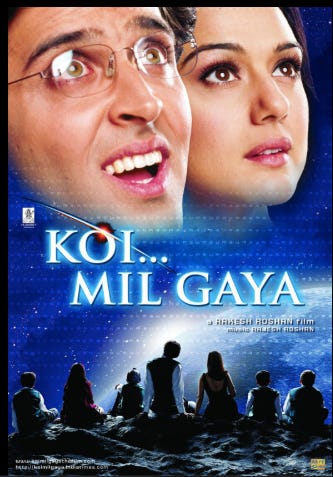
[Image Description: The faces of a surprised-looking Hrithik Roshan – a young Indian man wearing glasses, and Preity Zinta – a young Indian woman, gaze upward against a blue, starry background. Below them, the film title Koi… Mil Gaya appears in large glowing letters above silhouettes of children sitting together at night, looking towards the sky.]
Share the Global Directory of News Media Professionals
Reframing Disability’s Global Directory of Disabled News Media Professionals currently includes nearly 70 professionals from 17 countries and is steadily growing.
The Directory aims to give visibility to disabled media professionals by creating a database for those looking to commission paid work from them. It will help reduce some of the structural barriers they face, while making it easier for media to commission more diverse, inclusive storytelling and journalism.
Read more about its purpose and use. If you want your name to be added to the directory, please submit your details using this form.
Please share it widely to make it a success!
Today’s edition has an audio described video first published by The Global Disability News Network, explaining the trope through the example of the popular classic, Heidi. For captions, open the video in YouTube, and turn on CC.
This video is part of collaborative publishing between Reframing Disability and The Global Disability News Network. Read another collaborative piece about inclusion in podcasting at a Luxembourg organisation.
What is bad disability representation in media? Stereotypes that portray disabled people as burdens and disability as something to be cured extend beyond the screen to impact how disabled people are treated in their everyday lives. Follow along as Props No More Director Karina Sturm analyzes a classic story from her childhood, Heidi, to show what this narrative gets wrong about disability and how those stereotypes show up in the everyday lives of disabled people.
Audio Description by Social Audio Description Collective. Written by Cheryl Green. Blind QC by Nefertiti Matos Olivares. Narrated by Cheryl Green.
Produced by Karina Sturm and Lucas Fuchs.
Transcript
KARINA: [orchestral music] ♪ ♪ Heidi! Heidi! ♪ [in German] ♪ Your world is the hills! ♪ Okay. [theme music stops] Um... [laughs] [bleep] [super-upbeat percussive music] Hi. My name is Karina, and I’m the director of Props No More. I’m a white woman with some tattoos, a pixie cut, and I’m wearing a bright, bright, bright red dress on a very ugly green background. I don’t know if you are familiar with Heidi. Heidi is a childhood classic. I grew up with Heidi from a very young age, with all kinds of versions of Heidi. They would have had so many chances to actually do better, but they didn’t. They really [bleep]-ed up. -Now that is crap rep. [toilet flushes]
KARINA: They actually made it a lot worse. The version of Heidi I grew up with was not that bad. Or at least I can’t remember. For those of you who are not familiar with Heidi, Heidi is basically a young girl who lives with her grandfather up in the mountains. And at some point, this other girl named Clara joins her up in the mountain. And for an unknown reason, Clara can’t walk and needs to use a wheelchair. And Clara’s whole storyline is ableist. First, Clara basically has no personality.
[Clara grunts, solemn music plays]
CLARA: Help! Help! Help! [music darkens] HEIDI: Clara! Clara?
WOMAN: [gasps] Clara. Clara! [Clara grunts, strains] [thud] [sobs] [music brightens]
HEIDI: It’s the butterflies we chased. The ones who were dancing like friends, remember? So you can draw them at home. They’re for you.
CLARA: [sternly] Thank you.
HEIDI: Do you want to go and see the goats? Rudy told me there are some in the park.
RUDY: It’s true.
HEIDI: I could show you some tricks with them.
CLARA: Not today, Heidi. I’m not in the mood. [melancholy music]
HEIDI: I am so sorry, Clara. I shouldn’t have left you.
CLARA: No, Heidi. I’m the one who told you to go with Rudy.
HEIDI: I should’ve stayed. That’s what friends do. Ugh. I’m sorry I wasn’t a good friend. [music continues, birds singing]
GRANDMA: Are you sure you’re all right, dear?
CLARA: It didn’t hurt, Grandmamma. I just wasn’t strong enough.
GRANDMA: That’s all right, Clara.
CLARA: I think I’d rather go home and rest now.
KARINA: She’s just a prop. She’s just there to suffer and to be a burden on Heidi and everyone else. We don’t know [bleep] about Clara. Like, we don’t know what she likes. She’s a child. I mean, maybe she likes playing chess or whatever, but we don’t know because we only learn about how hard it is for Heidi to actually care for Clara.
That is pretty bad. The other storyline, and that’s a very common one, particularly in children’s TV shows or books, is this “overcoming” of disability. So, Clara can’t walk, and then the happy ending is Clara miraculously being cured and able to walk. And everybody’s gonna celebrate that.
CLARA: I need to take care of her so she can walk, and we can all do things together.
PETER: I don’t want to do things with her! She stole our friendship! You let her do it.
HEIDI: Huh?
PETER: If she can’t walk, she shouldn’t be here.
HEIDI: How can you say that? That’s so unfair, Peter. It’s not her fault if she needs my help. You should understand.
CLARA: Heidi.
HEIDI: [sobbing] Oh, Peter. [solemn music]
CLARA: Heidi? [Heidi suddenly stops sobbing] [gasps] Clara? You’re walking! I.... Oh. I am?
HEIDI: Clara!
CLARA: Heidi. [music brightens, Heidi giggles] [both giggling cheerfully]
WOMAN: Good morning, ladies. The blacksmith will have a brand-new wheelchair for you in just a few days, Clara. [girls giggle]
CLARA: We might not need it, Miss. WOMAN: Why is that, Clara? [triumphant music, Clara sighs]
WOMAN: [gasps] Clara.
KARINA: Portrayals like these are very, very harmful to the community. It just sucks to grow up around the stereotype of disability needing to be cured or just needing to disappear. And I can give you an example of this. Whenever I tell people I have a disability or a chronic illness, they usually react like, [pitying voice] “Oh, my God.”
And they pity me, and they give me all these advises of whatever I should try to do to be cured. For instance, yoga is a favourite one. [ethereal, mock-spiritual music] Funnily, it didn’t help. But also, I don’t need to be fixed or cured because disability is nothing to be fixed. My life is very full and probably sometimes even, even richer than other people’s lives, and I have nothing to complain about. And so, these stereotypes reinforce that belief of other people that disability needs to be miraculously healed or cured, and it’s just very harmful. I don’t wanna end on this very negative note. There are more and more examples of good representation on TV or in movies, and we will talk about those in our next video. So stay tuned for more content from Props No More. [chill music] [peaceful ambient music]
TIP: To download the transcript, I pasted the YouTube URL into notegpt.io, which helped me generate the script without timestamps.
Watch
Koi…Mil Gaya and Heidi on YouTube.
Logo ID: On a bright purple background, two white hand illustrations form an open rectangular frame. Inside the frame, the words ‘Reframing Disability’ are written in white text, symbolising a fresh perspective on disability.
ICYMI (In Case You Missed It)
Reframing Disability’s previous issues featured an interview with a journalist with a psychosocial disability and a manifesto for interviewing autistic people and telling their stories. Read or listen if you haven’t already!
What do you think of this edition? Press reply and let me know of any other media that follows the ‘magical cure’ trope. I’m available on LinkedIn and Instagram as well, and Reframing Disability has an Instagram account too. Engage wherever you are active!
Warmly,
Priti
I think the magical “cure“ is an illusion we make ourselves to believe; it doesn’t really exist. a disabled person has to work hard to change their life and adapt to new tough reality; it takes work. a lot. while the “cure“ promises a way to get rid of all the issues and struggles, but it functions as a dream, not as something real.
It’s truly impressive how older films solved complex disabilities in the span of a single scene. Forget years of rehabilitation or systemic challenges; just have the hero’s mother endure a brief, suspenseful surgery and a theatrical reveal. Nothing screams 'narrative convenience' quite like a magically restored sense of sight the moment the gauze hits the floor.