
Centering the chronically ill person the media forgot
Writer and editor Namrata on why the media needs to portray chronic illness as a social, political and emotional experience

Hello, Reframers,
Are you a movie buff and an American Sign Language user? Then I’d suggest you install SignUp’s free-of-charge Google Chrome extension and watch picture-in-picture ASL overlays for all of their Oscar best picture 2026 nominees. Follow these easy instructions for downloading the Chrome extension and how you can add an ASL interpreter in any size, anywhere on screen. Apart from the Oscar nominees, the interpretation is available for a variety of media on Netflix and Disney +, so do a quick search for a title of your choosing. If you can’t find it, send a request to SignUp right away through the same route.
[Logo ID: On a bright purple background, two white hand illustrations form an open rectangular frame. Inside the frame, the words ‘Reframing Disability’ are written in white text, symbolising a fresh perspective on disability.]
Today is Hashimoto’s Disease Awareness Day, which is why this issue is out early, on a Wednesday featuring, Namrata, a friend of Reframing Disability. She is an Indian writer and editor whose work often explores the intersections of literature, health, and identity. Since 2014, she has lived with two chronic conditions, Hashimoto’s Disease and Type 2 Diabetes Mellitus. Namrata writes personal narratives and critical essays —like the one in today’s edition —that centre lived experience, care, and resilience, and is the founder of the book marketing consultancy, Bookbots India and the literary consultancy, Keemiya Creatives.
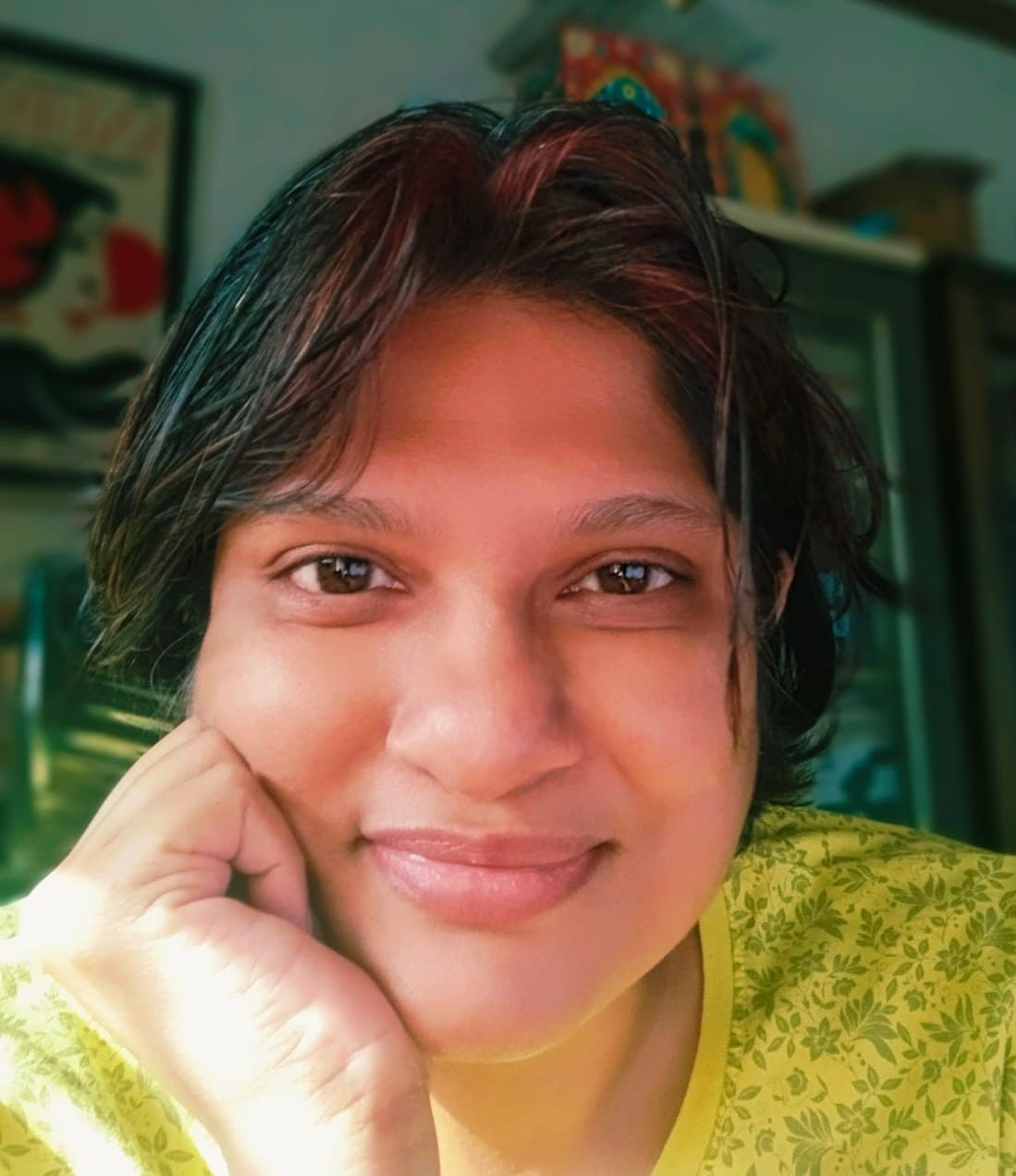
[ID: Namrata, an Indian woman with short dark hair is wearing a yellow T-shirt with a print of light green flowers. Her hand is placed on on her right cheek and she is smiling at the camera.]
“Chronic illness didn’t break me as much as corporate indifference did”
“In India, living with two chronic conditions can mean many things—sympathy, pity, challenge, or even nuisance, depending on the lens through which it is viewed,” Namrata tells Reframing Disability. “What these illnesses taught me early on is that the body speaks first, and explanations come later.”
Hashimoto’s Disease is an autoimmune condition in which the immune system attacks the thyroid, often mistaken for a simple hormonal imbalance that can be fixed with medication. Type 2 Diabetes Mellitus (T2DM), on the other hand, is frequently framed as a lifestyle failure rather than a complex metabolic condition shaped by genetics, stress, and environment.
“Together, they demand constant vigilance, patience, and negotiation, both with the body and with the world around it.”
Namrata elucidates her lived experience in her essay:
Most mornings, my first conversation is with fatigue. It arrives before sunlight, before thought, before whatever version of myself the world thinks it will meet that day. It sits with me as I try to wake up, reminding me, gently but firmly, that my body has its own weather system.
I used to believe mornings were neutral. Now they feel like negotiations.
People think fatigue is simple to resolve with a yawn, a coffee, or a shrug. But Hashimoto’s fatigue is not tiredness. It is a kind of gravity. It pulls at you from the inside. And the hardest part is not the heaviness itself, but explaining it to people who believe thyroid illness is a switch you flip with one pill. Autoimmune disease does not work that way. It is tidal. It comes and goes without warning, leaving you to rebuild yourself again and again.
Enter T2DM
T2DM joined my story in 2021, quietly but decisively, like an unexpected character walking into a scene and changing the entire plot.
There is science behind how frequently these two conditions travel together. Several Indian studies report significant overlap: one recent analysis of adult Indian women with T2DM found about 14% had coexisting hypothyroidism, most of it undiagnosed. Another large observational study confirmed that thyroid dysfunction and even thyroid autoantibodies show up frequently among diabetic patients.
I didn’t need research papers to tell me these illnesses often walk together. My own body taught me that lesson early.
The loneliness of managing chronic illness
Managing chronic illness is rarely about medication alone. It is about people around us. About whether you find a doctor who listens rather than rushes. About whether your workplace sees you as human or as a problem. About whether society believes your pain or treats it like melodrama.
The hardest part of T2DM, for me, has never been sugar. Or food. Or numbers. It has been the loneliness of trying to find clinical care grounded in empathy. You would think that would be easy in a country where diabetes is everywhere. But that is precisely the problem: when something becomes so common, people stop seeing the person behind it.
When I asked for accommodations at my corporate job, back when I was an investment banker, the response was brutal. I was forced to resign without pay, without notice, without acknowledgment of the years I had invested. It still makes my stomach clench when I think of it. Chronic illness didn’t break me as much as corporate indifference did.
People often ask whether I identify as disabled. The honest answer is: partially. Some days yes, some days no. Autoimmune illness is conditional, invisible, and unpredictable. I feel disabled on the days when a 1.5-hour drive to meet a friend drains all the energy I had saved for the actual meeting. By the time I arrive, I am running on fumes. But because I ‘look fine’, people assume I am simply quiet or introverted. They don’t see the invisible toll.
This invisibility breeds stereotypes. “You don’t look sick.” “You don’t sound sick.” “Why do you complain so much?” Or my personal favorite: “Your posts about illness are depressing.”
An urgent switch from triumph to truth
The world prefers sanitised stories of illness. The triumphant kind, and the easily digestible kind. Not the everyday truth of fatigue, fear, and negotiating limits. Chronic illness only becomes acceptable when it’s inspirational. Anything else is perceived as indulgence.
This is where media representation becomes crucial. For much of my life, T2DM has been framed as a morality tale, one built on shame and simplification. “Too much sugar.” “No discipline.” “Bad lifestyle choices.” What rarely enters the conversation are genetics, autoimmune links, metabolic complexity, or structural inequality. In India, where over 212 million adults live with diabetes—the highest number in the world—and 62% remain untreated, the narrative of individual failure collapses under its own weight.
The question, then, is not whether people are making the right choices, but whether the system allows for them at all.
Consider food. We speak endlessly about lifestyle changes, yet offer little structural support to make them viable. Healthy food remains expensive and inaccessible for many, while ultra-processed food is cheap, ubiquitous, and aggressively marketed. Regulatory action around sugar content, food labeling, trans fats, and junk food advertising remains hesitant at best. Awareness campaigns abound, but accountability is scarce. People are told to eat better in an environment that actively works against that advice.
Despite this, mainstream media across newspapers, television, and film, continues to rely on tired shorthand about chronic illness. What is missing are the realities: unpredictable fatigue, long commutes that drain the already limited energy, medical gaslighting, emotional labour, bureaucratic navigation, and the constant internal negotiation required simply to function.
Growing up, I never saw someone like me in stories
Hashimoto’s barely existed in mainstream conversations. Diabetes was a punchline. I had to go online to support groups, to community pages, often from people living abroad to find real stories. Stories that didn’t blame the patient. Stories that held pain with tenderness. Stories that felt like companionship rather than warning signs.
I didn’t find those stories in the Indian media. I found them in small digital communities, in newsletters like this one, where people spoke with tenderness and courage about their bodies. Reframing Disability does something Indian media rarely does: it makes invisibility visible. It gives space to the narratives that are usually brushed aside because they don’t fit the inspirational template. It acknowledges that chronic illness is a social experience, a political experience, and an emotional experience.
I often wonder how much softer my early years with these illnesses would have been if I had seen an accurate representation. A character on-screen who navigated fatigue without being mocked. A workplace scene where a chronic illness request wasn’t treated like betrayal. A profile of someone thriving with accommodations, not in spite of needing them.
These are the stories I needed. These are the stories many of us still need.
Chronic illness doesn’t make me less. It makes me different. It makes my days shaped by intention. My victories are subtle but profound. My life is slower but somehow brighter in its attentiveness.
And maybe that is the real story, the one I want the media to finally tell: Not the illness itself, but the person learning to live inside it.
Edited by Priti Salian
Namrata’s recommendations
Read
Living With Chronic Illness: Lasting Impressions — Feminism in India (2019)
A deeply personal essay by Namrata, exploring the lived experience of chronic illness in India, unpacking both the physical and emotional terrain of persistent health challenges.Healing Autoimmune Conditions by Dr Rachna Chhachhi — A practical and compassionate Indian perspective on autoimmune disease, including metabolic considerations and lifestyle contexts relevant to Indian readers.
The Mysterious Ailment of Rupi Baskey by Hansda Sowvendra Shekhar — Not about diabetes or Hashimoto’s directly, but an empathetic representation of illness, stigma, and health systems in India.
Watch
Sugarless (2022) — Kannada film exploring a young man’s experience with Type 2 Diabetes in an Indian cultural context, tackling stigma and lifestyle pressures.
The Brown Heart (2025) — Documentary‑drama addressing cardiovascular and metabolic health challenges among South Asians (available on JioHotstar).
Listen
Ropana (रोपण) — A Spotify podcast featuring discussions on chronic illness management, lifestyle approaches, and holistic perspectives, often including Indian experts.
Health & Endocrinology Focused Shows
While not exclusively India‑centric, these podcasts cover diabetes, thyroid, and chronic illness with medical experts and patient narratives, providing nuance beyond typical public discourse:
ICYMI (In Case You Missed It)
In an earlier issue, Siddharth Kankaria wrote about the quiet, unglamorous labour of living with Type 1 Diabetes, also an autoimmune condition.
In case you missed the most recent editions, journalist and content creator Shelby Wright spoke to the rise of the media created by the disabled community and Puneet Singh Singhal and Soumita Basu shared tips on navigating disability activism on social media (this piece comes with a Hindi-language podcast).
Will you support the work of Reframing Disability if you value it?
Hidayah Salamat, Managing Editor & Thought Leadership Content Expert at Living Telling Media, Singapore, said:
“The work you do is eye-opening, an incredible contribution to both the media and the communities we serve. Thank you, Priti!”
If you’re reading this, you likely find value in this newsletter. Do you value it enough to pay a small sum to support this independent media?
Here are ways you can make a financial contribution:
International
A one time contribution of any amount, or through a custom monthly subscription via this link.
If you prefer PayPal, you can contribute at pritisalian@gmail.com.
Indian
Make a one-time or recurring contribution of any amount using this UPI QR Code:

For contributors in India, a one-time payment of ₹5,000 would be especially helpful. Twenty such contributions would allow me to hire someone part-time for four months.
International contributors, a one-time payment of £50 or $60 would support in the same way.
Thanks for reading, or listening to this issue (on the Substack app). As always, press reply to share your thoughts —I love to hear from you! I’m also available on LinkedIn and Instagram and Reframing Disability has an Instagram account too – follow and engage!
Until soon.
Warmly,
Priti
As someone with a rare, progressive autoimmune disease, I resonated with every word Namrata wrote. Thank you, Namrata, and thank you, Priti, for curating stories of the overlooked and the invisible.
The organic-ness, insightfulness and willingness to be vulnerable with which this is told leaves a refreshing and healing impact. Sending strength to Namrata.