

Dear Reframers,
Earlier this week, I was in a happy place, in the company of people who are making the world more inclusive. First, as a participant of the international delegation at the Zero Project Conference and then as faculty at the Queer India Fellowship. Meeting some of you was the chocolate icing on the cake!
Thanks as always, for writing in. The most recent story, When Blind Professionals Make Audio Description, Everyone Sees a Better Story, was received with much love.
Here’s what reader Charmaine Ashpole said:
“An absolutely wonderful piece, which encapsulates precisely why blind and partially-blind people should be immersed and engaged with in creating audio-description, as experts in and inclusively-designed end-to-end process, which would lead to better beautiful AD which would serve so so many people better, even, perhaps, non-blind ones, once they’ve been initiated into the magic of well orchestrated AD, which enhances the entire production, quite frankly.”
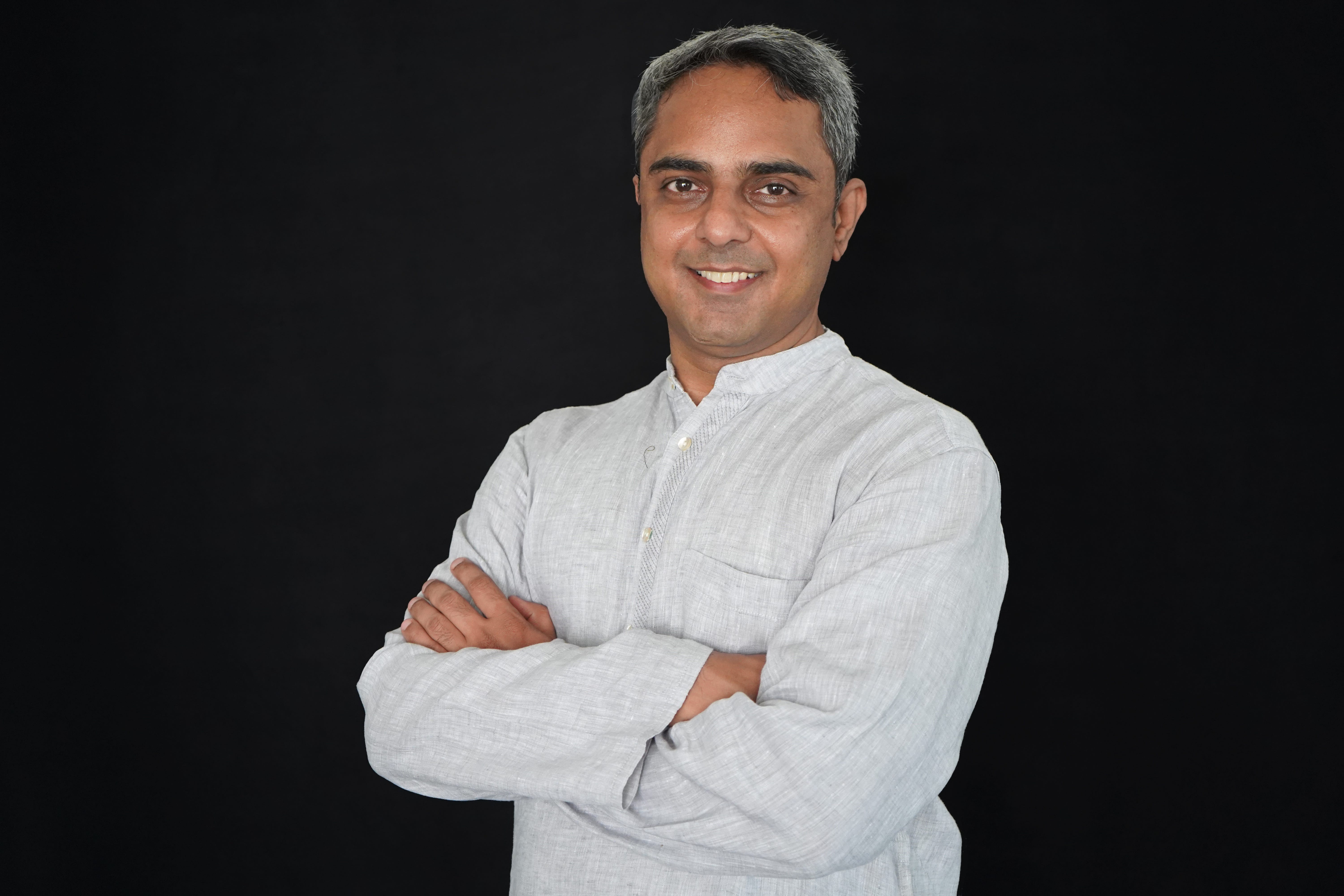
Today’s essay is from the Vishal Talreja, co-founder of Dream-a-Dream, an organisation doing admirable work on transforming the educational experience of India’s vulnerable youth. Vishal describes what anxiety and panic attacks have felt to him, and the process of accepting a new pace of life for himself.
“I’m a man, I can’t fail. I can’t show weakness”
Darkness within
It creeps up slowly
When I least expect it
Where I least expect it
I feel the shift
Deep in my bones
In a moment of pause
Before the floodgates open
I wish it would go away
But it takes over
A moment of vulnerability
Is all it needs
A doubt
A feeling
A question
To own me again
On an ordinary day
It creeps in
Grabs me hard
Takes me down
Paralysed
I am out of sync
With the bright sunshine
Happy people around
Slowly being engulfed
By a darkness within
It gnaws at me
For hours on end
An epic battle
I know I will lose
I slump down
My body succumbs
Frantically, I seek threads to grab onto
Bits of happiness, joy and laughter
Memories of happier times
love and friendships
The more I seek
The more futile it is
For these very thoughts
Feed the frenzy
Taking me down
To the darkness within
That seems impossible
To rise out from
I give in.
I’m Vishal Talreja, co-founder of Dream a Dream and Founder of The Cocoon Initiative, a social entrepreneur, an educator and facilitator working with young people. I’m also a son, brother, husband, friend, and a proud parent to two bratty cats. Since childhood, I’ve been deaf in my left ear. Over the last decade, I’ve dealt with clinical depression, anxiety, high blood pressure, hypertension, and a host of other health issues. I’m also a cisgender, heterosexual, upper caste, upper class, Hindu male in a position of influence. I carry a multitude of identities and I’m learning to accept the good, bad, and ugly in each of their identities within me.
In 2009, ten years into building and running my organisation, Dream-a-Dream, I first experienced burnout.
On a Monday morning (which I usually look forward to), I woke up with the thought - I didn’t want to go to work! The thought scared me and shook me to take a pause. How could I NOT want to go to work? Something is terribly wrong. Listening to my instinct, I disappeared for a week into a forest, shut off my devices and slept. I was exhausted. The build up had been happening for a whole year and more, the thought was the final trigger.
Upon my return, I realised there was something fundamentally wrong with the way we were building the organisation and its people culture resulting in toxicity, fatigue and burnout not just for me but also for the team. So we started to change things. We almost restarted the organisation. Over the next decade, with good leadership, a grounded value system and a culture representative of our values (trust, dignity & accountability) - the organisation thrived, grew, and continues to create immense impact.
While the organisation went about its own journey, I got left behind. I continued to struggle and experienced phases of inspiration and depression. Moments of being driven to work seven days a week, 14 hours a day. Moments of pushing for innovation, change, drive, and moments of feeling hopeless, helpless, joyless, purposeless. I didn’t know what was going on. So I said to myself, “It’s a phase. It’s okay. It’s the work that I love to do. I’ll get back to it.”
But every moment told me that I was hurtling towards further burnout and exhaustion. And I kept denying it. I kept pushing it back.
So I started looking at quick fixes.
“Let’s address the symptoms with medication. Let’s go for therapy. Let me go away on a holiday. Let’s change leadership in the organisation.”
I tried different things but these were still just dealing with the symptoms. I kept blaming everyone else. I started thinking like a victim. I didn’t know what to do. My doctor told me I have compassion fatigue. I care too much. Was that really wrong?
Then came the COVID-19 pandemic. The sense of helplessness, overwhelm, hopelessness, and years of work that got undone, hit me hard. So as soon as the pandemic eased, I wanted to get back into the field and catch up with the time we had lost. But I wasn’t ready, and neither was my body.
In 2022, I had a breakdown. I couldn’t step out of the house for two months. If I opened the front door, I’d get palpitations and breathlessness. I would shiver and start sweating. I didn’t know what to do as I didn’t know what was happening to me.
Meeting family and friends became difficult. I remember going to my local barber for a haircut and I couldn’t sit there for five minutes. There was this overpowering fear that something bad was going to happen. Like a heart attack or a panic attack. I felt like I would collapse. My anxiety was at its peak. My muscles were cramped, I could not move, my breath was uneven and shallow and I was sweating. I had to be back home, which had become my safe haven.
A few months later, I felt slightly better, so I decided to meet a friend for lunch within 100 meters of my home. Within 15 minutes of sitting with my friend, my body had tightened, I was experiencing breathlessness, palpitations, immense cramps and the same unknown fear. My friend had to walk me home.
That was the moment when I thought, “Okay, enough. I can’t keep doing this. I can’t play hide and seek with my own care and well-being.
It was hard, but I accepted that something was terribly wrong with me. These issues were not going to go away. I had to slow down, take a pause, understand them, accept them and take them on.
Acknowledgement was followed by a lot of different choices of slowing down, creating boundaries in relationships and work, and learning to say no. Seeking help and support was a whole new experience I had to learn and build muscle for. Finding a doctor who could see all these issues holistically and the inter-linkages was critical.
I asked for accommodations from the organisation, and they offered it to me. They gave me space and created collective environments of care and support. One of my biggest learnings was around receiving support. It’s all right to receive support, I told myself, because then I didn’t have to do it all on my own.
Another learning was being vulnerable and helpless in front of my partner and being able to tell her, “I need help”. I had to let go of old identities, narratives, and belief systems, such as:
“If I work hard, I’ll be successful.”
“I’m a man, I can’t fail. I can’t show weakness.”
“I have to be responsible. I’ve got to keep pushing forward.”
I remember my parents telling me, “There’s nothing like depression. Keep yourself happy, stay busy, you’ll be fine.” I had to accept the loneliness of not being understood.
I had to gently condition my mind that it is all right to let go of the identity of a strong man and seek support. That I can let go of wanting to be the hero of my story, and everyone else’s. I had to learn to recognise that taking care of myself and investing in self-love is an act of courage. It’s a gift that I’m giving myself.
During my first meeting with a doctor, who has helped me heal, I remember the doctor telling me, your body’s ability to handle base level stress is compromised. Your body is constantly in stress mode so even a simple chore of getting up in the morning seems like climbing a mountain. The journey included medication, therapy and a change in daily routine. Intense travel gave away to being a home. For someone, who was used to traveling for 10-14 days every month, I stopped traveling for three years and gave my body the time it needed to rest and heal. I learnt to be patient with myself and trust my body.
Days were filled with fear, anxiety and a faint hope that I might get better. Two steps forward, three steps back. On some days, I woke up, had a meal and went back to sleep. Sleep gave my body permission to slowly heal.
The first moment in probably two years when I felt I turned around came on a beautiful morning. Earlier, mornings were a chore, filled with anxiety, fatigue and exhaustion. Chores that would take 15 minutes - brushing my teeth, feeding my cats, putting fresh water out for them, cleaning their litter, throwing out the garbage - felt like I was taking hours to complete them. Then one day, I did them with a sense of calm, purpose and habit. They got done and I didn’t feel exhaustion or irritation. Wow! It felt different and so began a slow, intentional journey of getting better.
It’s 2026, I am still on the healing journey but now it’s one step forward and sometimes one step back. I am still on medication, I still have days filled with anxiety and I am still dealing with physical health challenges but I am healing.
Recommendations
Media that helped Vishal put words to everything that he was going through, helped him feel seen and heard, and validated his feelings.
Read
Decade of Anxiety - Transformed by Faith, Courage and Authenticity, by Arundhati Dantewadia
Anxiety - Overcome It and Live Without Fear, by Sonali Gupta
No Straight Thing Was Ever Made: Essays on Mental Health, by Urvashi Bahuguna
Active Hope - How to Face the Mess We’re in Without Going Crazy, by Joanna Macy
Listen
Share the Global Directory of News Media Professionals
Reframing Disability’s Global Directory of Disabled News Media Professionals currently includes nearly 70 professionals from 17 countries and is steadily growing.
The Directory aims to give visibility to disabled media professionals by creating a database for those looking to commission paid work from them. It will help reduce some of the structural barriers they face, while making it easier for media to commission more diverse, inclusive storytelling and journalism.
Read more about its purpose and use. If you want your name to be added to the directory, please submit your details using this form.
Please share it widely to make it a success!
Visual Description of Reframing Disability’s Logo
On a bright purple background, two white hand illustrations form an open rectangular frame. Inside the frame, the words ‘Reframing Disability’ are written in white text, symbolising a fresh perspective on disability.
ICYMI (In Case You Missed It)
Did you read writer and filmmaker Celestine Fraser’s interview, some of the most honest and innovative storytelling comes from having creative restraints, and journalist Harry Smith’s on how his complex lived experiences with dyslexia and cerebral palsy make him a better journalist. Read or listen if you haven’t already, and let me know what yo think! I’m available on LinkedIn and Instagram as well, and Reframing Disability has an Instagram account too. Engage wherever you are active!
Warmly,
Priti
The framing of burnout as 'unexpected lessons' rather than a failure state is doing a lot of work here. Most recovery narratives focus on what you did wrong; the more useful question is usually what the experience is surfacing about how you've been working and what you've been optimizing for.
The reframe that success narratives quietly set us up for burnout rings true. What I keep coming back to is that you can't rest your way out of a life that's pointed in the wrong direction — the recovery has to include changing what you're saying yes to, not just recovering to say yes again. Grateful for Vishal's honesty here.